Boredom: The Trade You Didn't Mean to Take
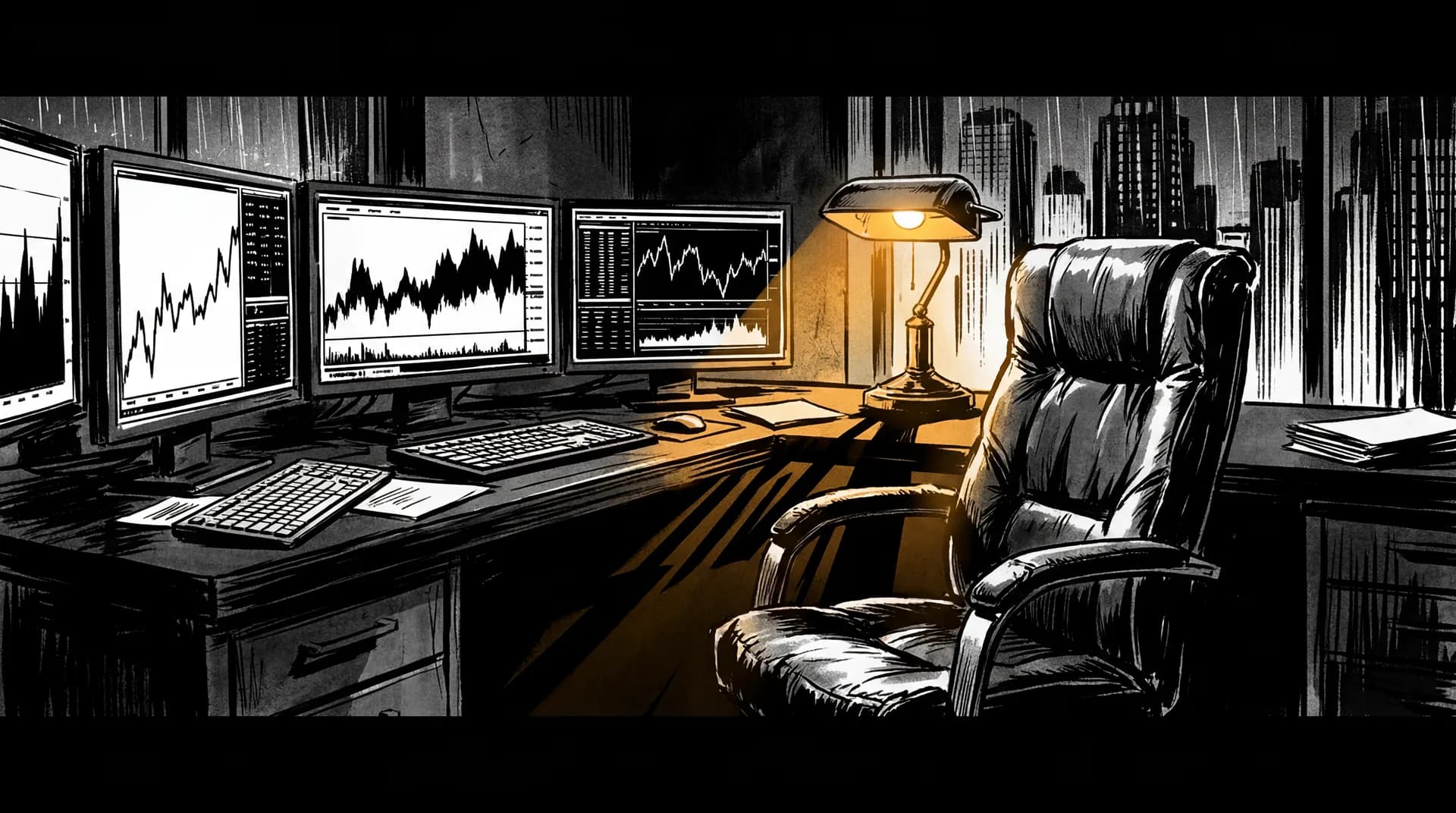
Most traders spend their early months afraid of losses. With experience, they discover a quieter and more consistent threat. It doesn't arrive with volatility or news events. It arrives during flat sessions, between setups, in the twenty minutes when nothing on the chart is doing anything worth watching.
Boredom is responsible for more unnecessary trades than greed, FOMO, or overconfidence combined. It's just less dramatic, so it rarely gets treated as the risk it is.
What Boredom Actually Is
Boredom is not the absence of stimulation. It's the gap between the stimulation you expected and the stimulation you're receiving. The brain registers that gap as a problem to be solved — and it will push hard for a solution.
Dopamine systems evolved in environments where inactivity carried real cost. Stillness meant missed food, missed threats, missed opportunity. The circuit that generates restlessness during slow markets is the same one that once kept your ancestors from sitting too long in one place. It was useful then. In front of a trading platform, it is expensive.
The result is a session where the technical conditions don't support a trade, the system has no valid signal, and the trader enters anyway — not because the setup was there, but because doing something felt better than doing nothing.
How It Compounds
The boredom trade rarely stops at one. A weak entry produces an anxious hold. An anxious hold produces a poor exit. A poor exit produces the urge to recover — which brings its own set of problems. What started as a slow morning becomes a losing session driven entirely by the need to fill silence with activity.
The market does not reward presence. It rewards accuracy. Sitting in front of a platform for six hours does not generate edge. A single well-executed trade in the right conditions does.
What to Do With It
Recognition. Boredom has a specific texture — a low-grade restlessness, a pull toward the platform without a clear reason to be there. Name it when it arrives. "This is boredom, not a signal." That gap between the feeling and the action is where the decision actually lives.
Pre-commitment. Define your setup criteria before the session opens. If those conditions aren't present, the answer is already decided — not in the moment, when boredom is loudest, but earlier, when you were thinking clearly. Rules set in advance don't negotiate with restlessness.
Redirection. The underlying drive — the need for stimulation — is real and doesn't disappear by being ignored. Journal the session. Review old trades. Do anything that engages the analytical mind without touching the platform. Give the restlessness something to do that doesn't cost capital.
Reframe. The session where no valid setup appeared and you took no trades is not a failed session. It is the system working correctly. Patience is not the absence of skill — it is one of the harder skills to execute consistently. The predator that waits for the right moment is not passive. It is precise.
The Reframe That Makes It Sustainable
Doing nothing in a slow market is not missing out. It is the strategy. Capital preserved on a low-probability day is capital available for a high-probability one.
Boredom is the tax on patience. It is uncomfortable by design — the brain does not reward waiting, only acting. But the market doesn't care what the brain rewards. It cares what you do with it.
Pay the tax. Don't trade the void.