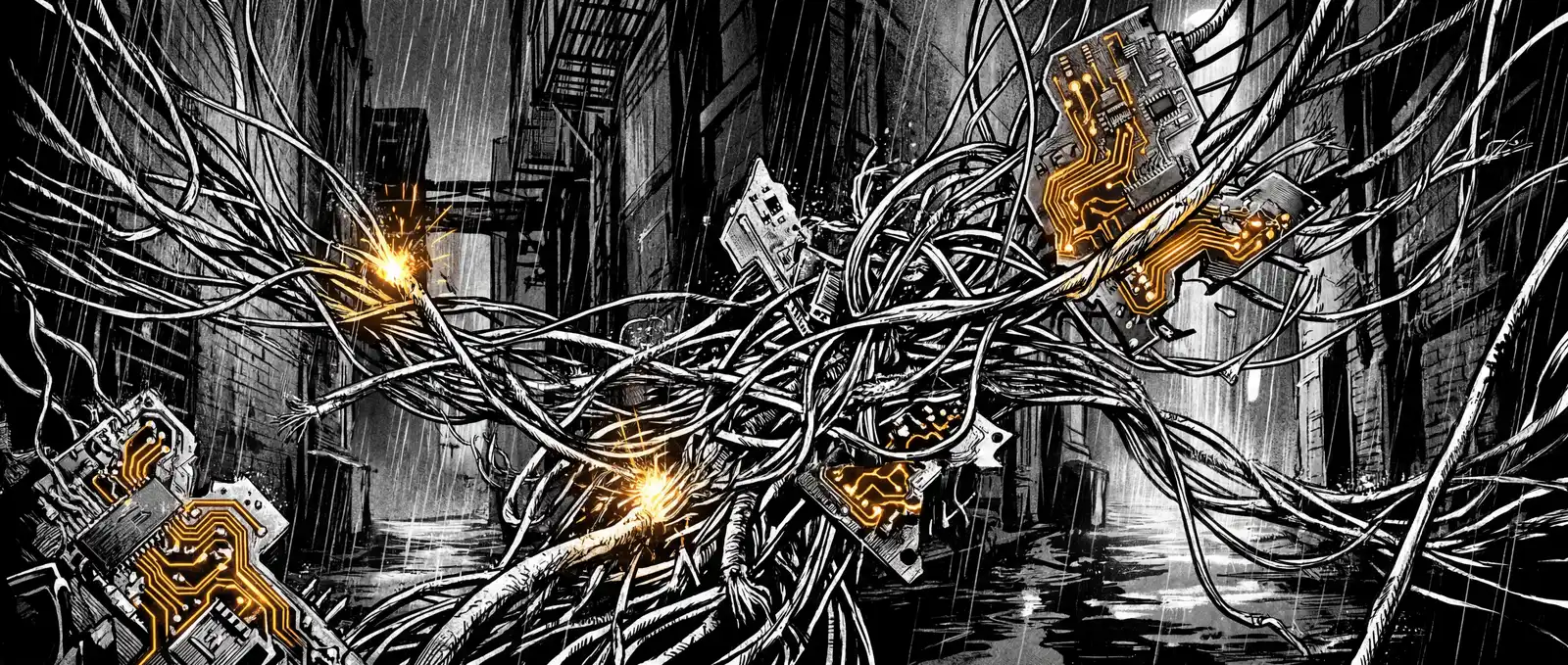
Why Traders Sabotage Simple Systems
A strategy that works is rarely complicated. This is one of the most consistently ignored facts in trading.
The setups that hold up over large sample sizes tend to be straightforward — a handful of conditions, clear entry criteria, defined risk. They fit on an index card. And that simplicity, for most traders, is precisely the problem.
The Complexity Bias
The brain associates sophistication with validity. A system with twelve conditions and four confirming indicators feels more serious than one with three. More rules suggest more thought, more mastery, more control over an environment that is fundamentally uncontrollable.
So traders add. Another filter to reduce false signals. Another confluence requirement to increase confidence. Another timeframe to confirm what the first two already said. The system grows until it is elaborate enough to feel worthy of the market — and brittle enough to stop functioning.
This is complexity bias at work. The belief that the answer, if it exists, must be difficult to find. That something simple couldn't possibly be sufficient.
It can. It frequently is.
The Control Illusion
Complexity also serves a psychological function that has nothing to do with performance. A more complicated system feels like a more steerable one. Add enough variables and it seems like you're actively shaping the outcome rather than placing a disciplined bet and waiting.
In practice, the opposite is true. Every additional rule is a new point of failure — another place where discretion creeps in, where the trader has to decide whether the condition is "close enough," where the system stops being a system and starts being a real-time negotiation with whatever the chart is doing.
Simple systems are easier to follow under pressure. And following the system under pressure is most of the job.
The Ego Problem
There is also a quieter resistance to simplicity — the feeling that a straightforward strategy is somehow beneath the effort invested in understanding markets. That profit should be commensurate with intellectual complexity. That if anyone could follow the rules, the rules can't be that good.
Markets don't reward cleverness. They reward consistency applied over sufficient sample sizes. The trader with a simple, robust edge who executes it without deviation will outperform the trader with a sophisticated system they can't follow — every time, over enough trades.
What Simplicity Actually Requires
The paradox is that simple systems are psychologically harder to run than complex ones. There are fewer places to hide. When the edge goes through a losing stretch — and it will — there is nothing to adjust, nothing to optimize, no new indicator to add that might fix it. You sit with the discomfort and keep executing.
That restraint is not passivity. It is one of the more demanding things a trader can practice.
The map doesn't need to be complicated. It needs to be correct, and followed. Those are the only two criteria that matter.